Méridien · Deep time, read from a satellite
The desertis new here.
Under the world's largest sand desert lie the beds of roughly 10,000 vanished lakes. In the wet windows of the last quarter-million years, Arabia turned to grassland, rivers ran, and people walked through on their way out of Africa. The evidence fills the museums of Riyadh. Start by dragging the map.
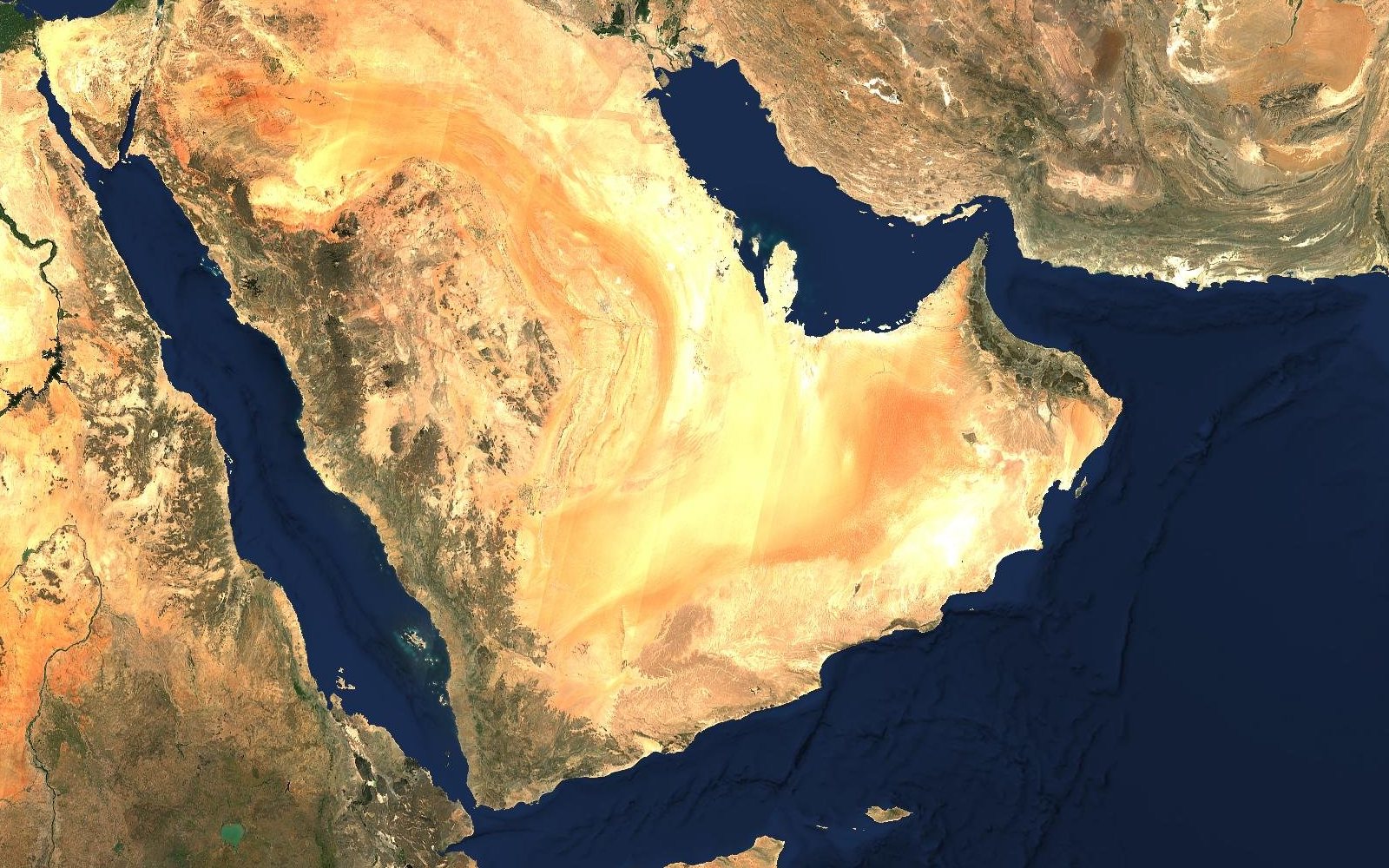
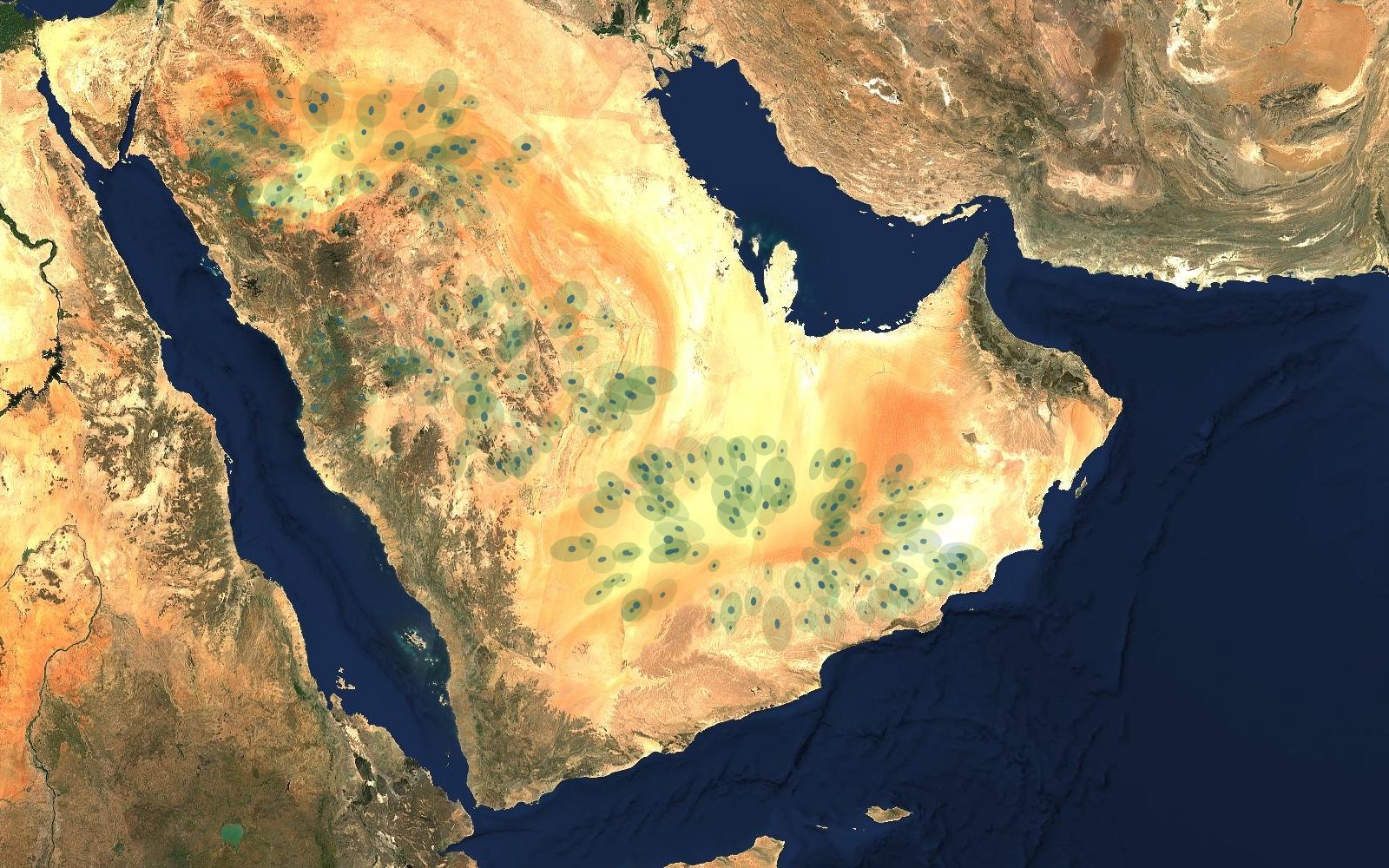 WET PHASE · SCHEMATICTODAY
Drag between today and the green Arabia
Walk the shores
GREEN ARABIA · SATELLITE: SENTINEL-2 CLOUDLESS BY EOX · MODIFIED COPERNICUS SENTINEL DATA 2020 · GREEN PHASE: SCHEMATIC
Exhibit 01 · The wet windows
Footprints on a lakeshore, 120,000 years old
When the monsoons shifted north, the desert opened. Satellite surveys count roughly 10,000 palaeolake beds across the peninsula, and the digs along them keep returning human traces.1
~120,000 years
The Alathar footprints2
Human footprints pressed into the mud of a lake in the Nefud, found alongside the tracks of elephants and camels: the oldest securely dated trace of our species in Arabia.
~85,000 years
The Al Wusta finger bone1
A single Homo sapiens finger bone from another Nefud lakeshore, the oldest directly dated human fossil outside Africa and the Levant.
wet phases
Hippos in the Nefud1
Excavated lake deposits hold hippopotamus, water birds and grassland fauna, in a place where rain now barely falls. Forty-six ancient lake sites have yielded artefacts so far.
10,000
Exhibit 02 · The monuments
Older than the pyramids, by two thousand years
When the last wet phase faded, the people stayed and built. Northern Arabia keeps two records: the world's oldest life-size animal reliefs, and a ritual landscape of stone rectangles that predates the pyramids.3
Older than, in thousands of years before present
The Camel Site's twenty-one life-size camels and equids were carved with stone tools, each figure taking an estimated ten to fifteen days. The mustatils are stranger: over 1,600 rectangular ritual enclosures, twenty to six hundred metres long, spread across 200,000 square kilometres — the earliest monumental ritual landscape known anywhere.4
1,600+
Exhibit 03 · The route
The desert learns to trade
By the first millennium BCE the caravans had made the crossing routine. Qaryat al-Faw, capital of the Kingdom of Kinda on the incense road, entered the UNESCO World Heritage List in July 2024, the kingdom's eighth site.5
Al-Faw's roughly 12,000 archaeological remains span more than six thousand years of settlement: temples, tombs, frescoed houses and caravan markets at the edge of the Empty Quarter. Its bronzes, gold and wall paintings travelled 700 kilometres north, to the museum this story ends in.
12,000
Exhibit 04 · The museum
Where the deep time is on display
Everything above converges on one address: the National Museum of Saudi Arabia in Riyadh, eight galleries running from the universe's origins to the present, built in 26 months to Raymond Moriyama's design.6
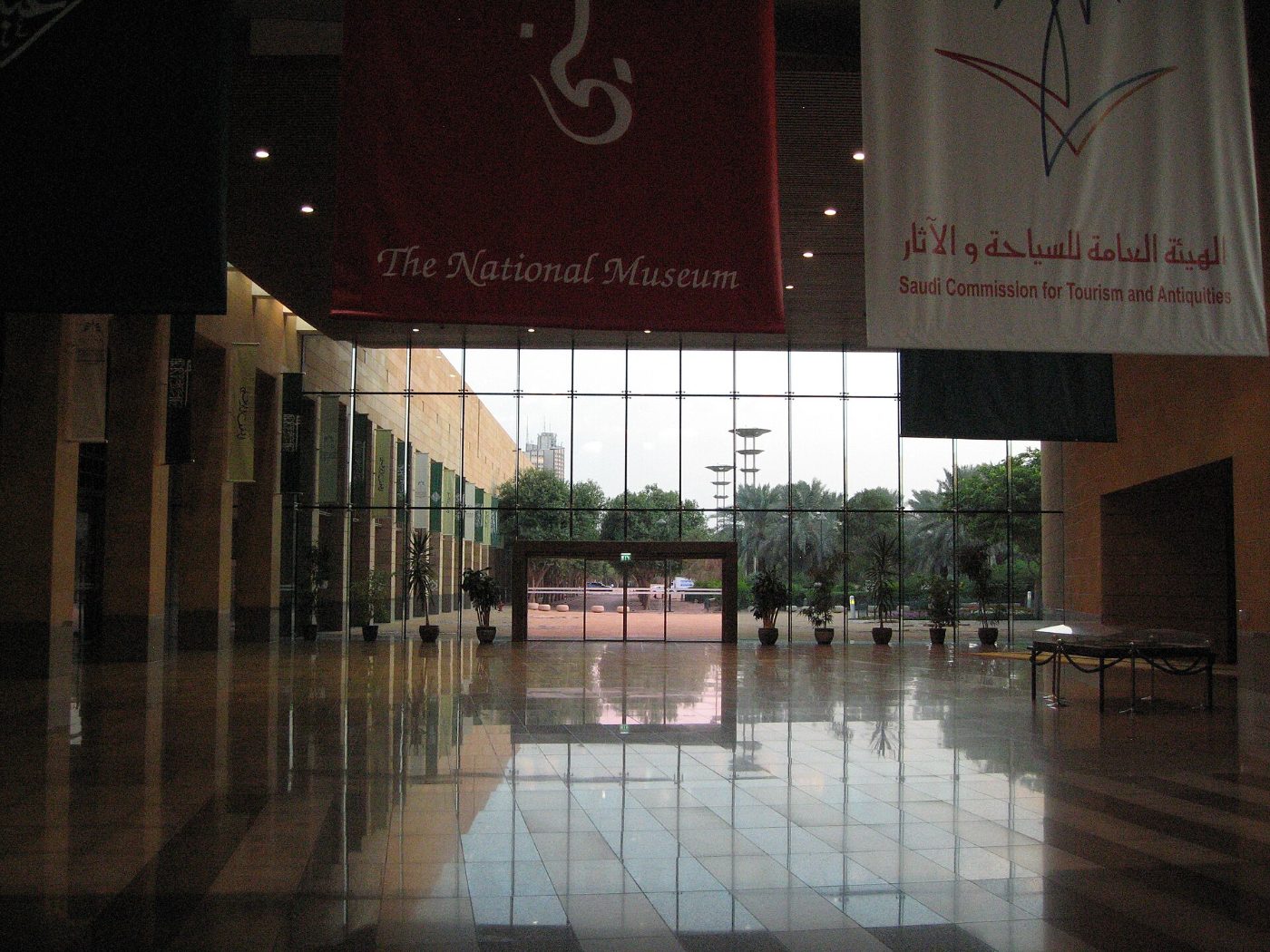
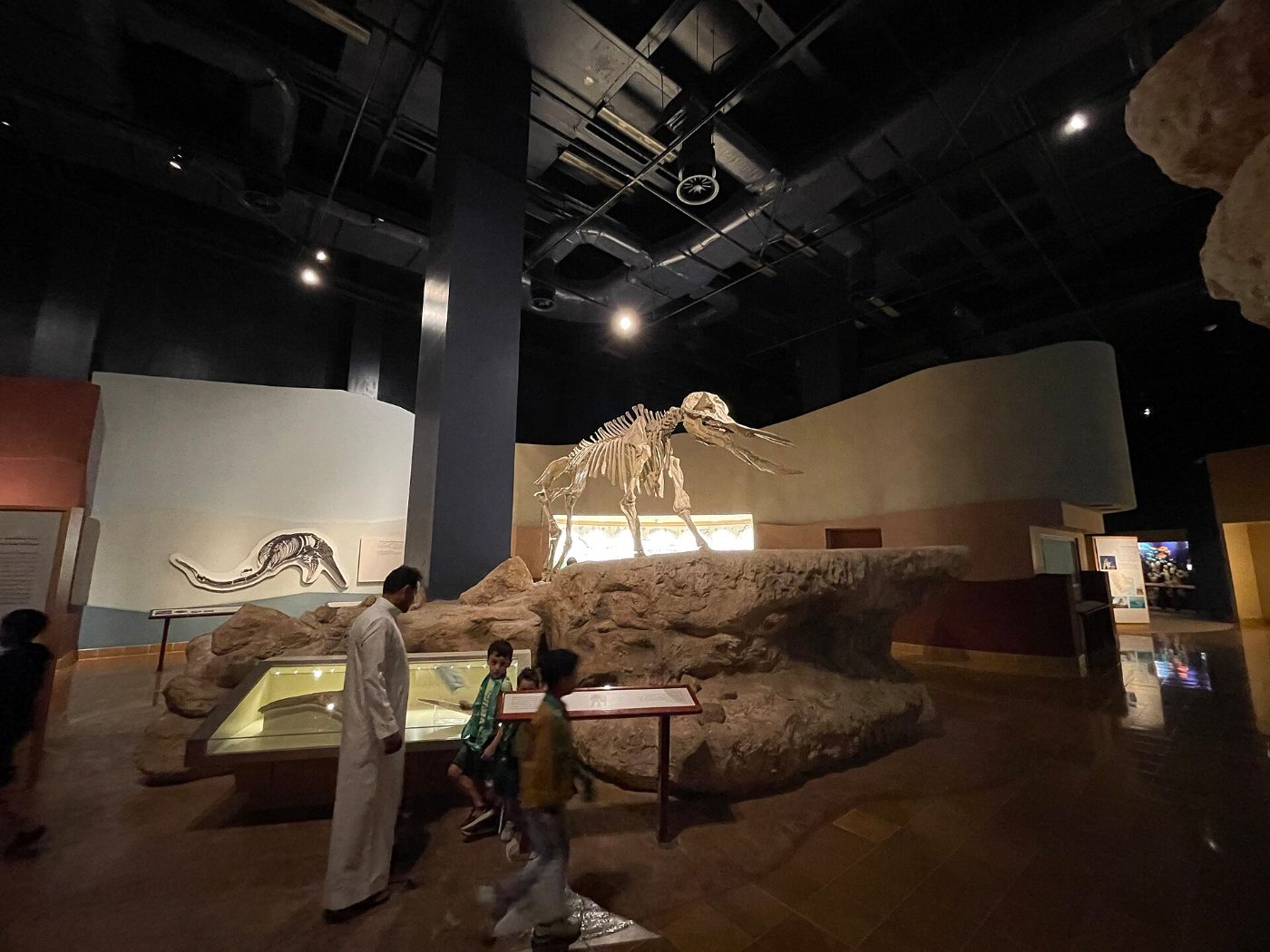
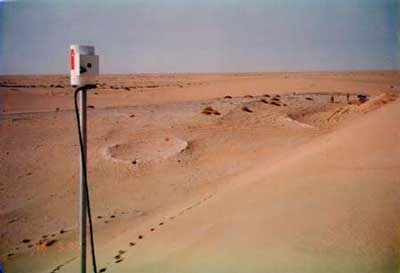
The lobby opens with deep time made touchable: the Camel's Hump, a 2.2-tonne fragment of the Wabar iron meteorite, recovered from craters in the Empty Quarter first reached by Harry St John Philby in 1932.7 The al-Faw treasures fill the pre-Islamic galleries a floor away.
The story is about to get a second address: the Museum of World Cultures, the flagship of Riyadh's museum boom, is being readied in King Salman Park under founding director Hartwig Fischer.8 Deep time, it turns out, is a growth sector.
2.2T
Exhibit 05 · The record
Sources
Dates and finds follow the academic record and UNESCO documentation. The green phase of the opening map is a labelled schematic after published palaeolake mapping, drawn for this story; it is not a climate reconstruction.
- 01Eos · Greener, wetter Arabia was a crossroads of early human migration (palaeolakes, Al Wusta, Nefud fauna)
- 02ScienceDaily · 120,000-year-old human footprints at Alathar palaeolake (2021)
- 03Smithsonian Magazine · Life-size camel sculptures older than Stonehenge and the Giza pyramids (2021 redating)
- 04Antiquity (Cambridge) · The mustatils: cult and monumentality in Neolithic north-western Arabia
- 05UNESCO World Heritage · Cultural landscape of Qaryat al-Faw (ref. 1712, inscribed 2024)
- 06Wikipedia · National Museum of Saudi Arabia (1999, Moriyama, 8 galleries)
- 07Saudipedia · The Wabar meteorite and the Camel's Hump
- 08ARTnews · Hartwig Fischer named founding director of the Museum of World Cultures
- 09Sentinel-2 cloudless by EOX (s2maps.eu) · modified Copernicus Sentinel data 2020 — satellite base of the opening map